You forget your keys for the third time this week. A friend texts, lol doh. You know exactly what they mean, even without a full sentence.
Doh is one of the most recognizable exclamations in pop culture. It’s the sound you make when you mess up something small and obvious. One word, instant relatability.
You’ll see it in texting, social media comments, gaming chats, and everyday conversation. It shows up whenever someone wants to react to a mistake theirs or someone else’s in a light, self-aware way.
Understanding doh matters because it’s one of those words everyone recognizes but rarely thinks about. Knowing where it came from and how to use it well helps you react naturally, instead of feeling unsure if it still fits modern texting.
This guide breaks down exactly what doh means, where it came from, and how to use it in real conversations today.
What Does Doh Mean in Text?

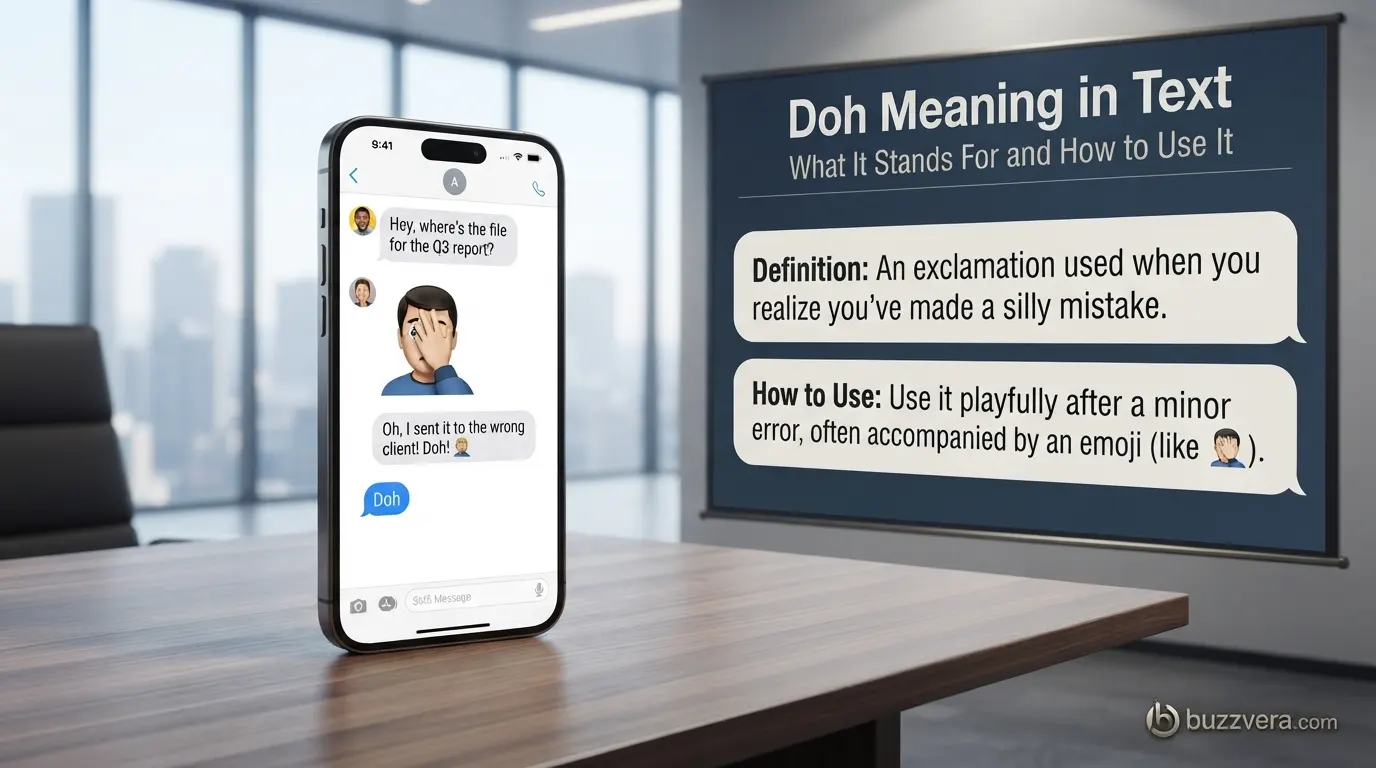
Doh is an exclamation used when someone makes a small, obvious, or slightly embarrassing mistake. It expresses instant self-frustration, usually in a light, funny way rather than a serious one.
Key point: Doh = oops, I can’t believe I just did that.
Real examples in text
Example 1 Forgetting something small
Jenna: did you bring the charger?
You: doh. no i didn’t 😅
Example 2 A silly mistake
Sam: i just replied to the wrong group chat
You: LOL doh
Example 3 Reacting to someone else’s mistake
Friend: i locked myself out again
You: doh, not again 😭
The tone of doh
Doh almost always carries a light, self-deprecating tone. It’s rarely angry or harsh more like a verbal facepalm.
- doh! playful, exaggerated reaction
- doh. mild, matter-of-fact acknowledgment
- ugh, doh slightly more frustrated, but still light
Doh as a quick reaction
People often use doh as a one-word reply to someone else’s small mishap, almost like saying classic or oh no.
Text: i missed my bus again
Reply: doh 😂
Key point: Doh works best for small, harmless mistakes not serious problems.
Where Did Doh Come From?
Doh has one of the most famous origin stories of any word in modern slang and it comes straight from television.
The Homer Simpson connection
Doh (often stylized as D’oh!) became internationally famous thanks to Homer Simpson on The Simpsons, which premiered in 1989. Homer uses the sound constantly whenever he makes a mistake, hurts himself, or realizes something obvious too late.
Voice actor Dan Castellaneta created the sound, inspired by a similar exclamation used in older British comedy. Once The Simpsons became a global phenomenon, doh spread far beyond the show.
From TV catchphrase to everyday word
By the 1990s and 2000s, doh had become so widely recognized that it entered real-world vocabulary. People started saying it in daily life, completely separate from the show itself.
In 2001, doh was even added to the Oxford English Dictionary, officially recognizing it as a real English exclamation.
The shift into texting
As texting and social media grew, doh naturally carried over as a short, easy way to react to small mistakes online no need to type out oops or ugh, I can’t believe I did that.
Where doh lives today
- Texting reacting to small mistakes
- Social media comments reacting to relatable posts
- Gaming chats reacting to a missed shot or silly error
- Everyday speech still commonly said out loud, not just typed
Fun fact: Few slang words can trace their origin to one single TV character as clearly as doh can.
How Doh Is Used in Different Contexts
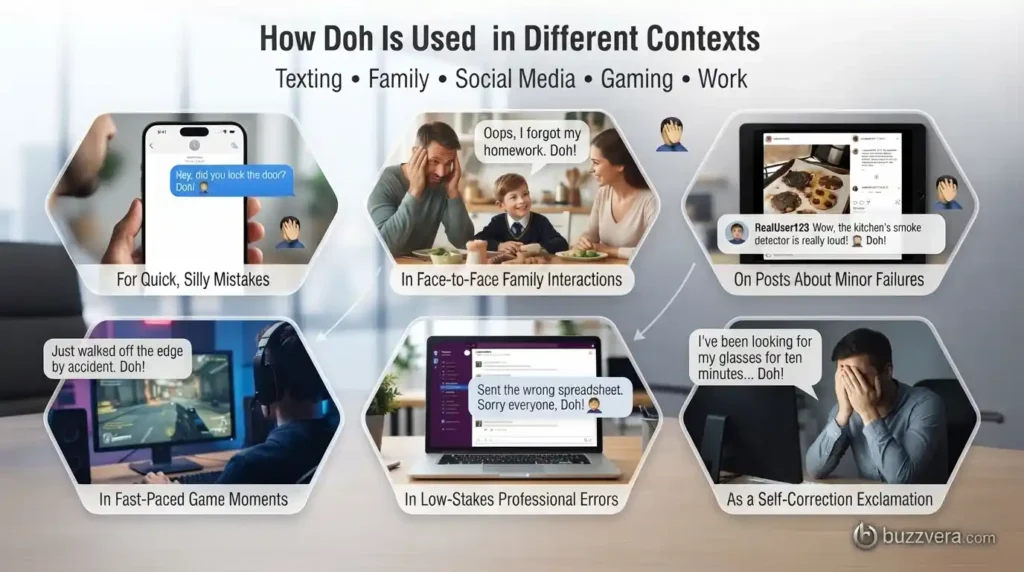
The feeling behind doh stays fairly consistent, but the situations shift.
In everyday texting
The most common use reacting to a small personal mistake.
Alex: i left my umbrella at the coffee shop
You: doh, classic you 😂
With family
Light and familiar, often paired with humor.
Mom: i forgot the oven was still on
You: doh mom 😭 glad you caught it
On social media
Used in comments reacting to relatable mistakes or funny mishaps.
Post: just realized i’ve been saying this word wrong my whole life
Comment: doh 😂 we’ve all been there
In gaming
Common reaction to a small, avoidable mistake during a match.
Teammate: i shot in the wrong direction the whole fight
Chat: doh 💀
In casual work chats
In relaxed workplaces, doh can pop up for small, harmless errors.
Coworker: i attached the wrong file
You: doh, no worries, resend when you can
As a solo reaction
Sometimes people say doh to themselves, out loud or in a message, right after realizing a mistake.
You: doh. i just sent that to the wrong person 😅
Key point: Doh fits almost any casual setting where a small mistake just happened it rarely fits serious or high-stakes situations.
Common Misconceptions About Doh

Let’s clear up a few things people often wonder about.
Myth 1: Doh is outdated slang
Not really true. While it comes from a show that started in the 1980s, doh has stayed steadily popular because it’s short, expressive, and instantly understood across generations.
Myth 2: Doh only works if you’re talking about The Simpsons
No. Most people use doh without thinking about the show at all it’s simply absorbed into everyday language now.
Myth 3: Doh means something serious went wrong
Not true. Doh is almost always reserved for small, harmless mistakes not major problems or emergencies.
Not this: doh, i just got into a car accident
More like this: doh, i forgot my umbrella again
Myth 4: Doh sounds childish or unprofessional in every setting
It depends on context. While not ideal for very formal writing, it isn’t considered rude or inappropriate just casual.
Myth 5: Doh has a hidden or different meaning
In modern use, no. Unlike some slang terms, doh has one clear, consistent meaning tied to small mistakes and self-aware humor.
Key point: Doh is simple and pretty safe the main thing to watch is matching it to small, low-stakes situations.
Similar Terms and Alternatives
Doh has plenty of casual cousins that express a similar feeling.
| Term | Meaning | Feel |
| Doh | Reaction to a small mistake | Playful, self-aware |
| Oops | Minor mistake acknowledgment | Light, common |
| Oof | Reaction to something awkward or unfortunate | Casual, sympathetic |
| Ugh | Frustration | Slightly more annoyed |
| My bad | Taking responsibility | Casual apology |
| Facepalm | Reaction to an obvious mistake | Visual, exaggerated |
| Classic me | Self-aware acknowledgment | Humorous |
Notes on the close ones
Oof leans more toward sympathy for someone else’s mistake, while doh often points more directly at the mistake itself.
Friend: i tripped in front of my whole class
You: oof 😭
My bad works well when you want to briefly apologize, rather than just reacting.
You: my bad, i’ll fix that now
Facepalm carries a more visual, exaggerated feel, often paired with an actual emoji 🤦.
Text: doh 🤦 i really did that
Key point: Swap doh for my bad when you want to sound a little more responsible, or oof when reacting to someone else’s mishap.
How to Respond to Doh
Your reply depends on the mood and relationship.
1. Casual and warm
Simple, friendly, keeps things light.
Them: doh, i totally forgot to text you back yesterday
You: no worries at all, happens to everyone
2. Funny reply
Great for close friends reacting to small mishaps.
Them: doh, i just called my teacher mom
You: 😭😭 iconic
3. Reassuring reply
Good when someone seems a little embarrassed.
Them: doh, i can’t believe i messed that up
You: honestly it’s not a big deal at all
4. Professional reply
If doh shows up in a relaxed work chat, keep your reply polished but friendly.
Coworker: doh, i sent that to the wrong channel
You: No worries, happens to all of us I’ll disregard it.
5. Privacy-conscious or neutral reply
If you’re unsure of the context, a simple, light response works well.
Them: doh…
You: everything okay?
Key point: Doh rarely needs a deep response a short, friendly reply almost always fits.
Regional and Cultural Differences

Doh started in American pop culture but spread widely thanks to global television syndication.
United States and Canada
Extremely recognizable, largely due to The Simpsons’ massive popularity across North America.
United Kingdom and Ireland
Just as common in fact, some linguists note the sound has roots in older British comedic exclamations, making it feel very natural in British English too.
Australia and New Zealand
Widely understood and used casually, especially among fans of the show and general pop culture.
Non-English-speaking regions
In many countries, doh is recognized primarily through dubbed or subtitled versions of The Simpsons, which has aired internationally for decades. Usage varies, but recognition is high among fans of the show.
Localized versions: Many countries kept a similar sound in their own dubbed version, showing how universally relatable the exclamation is.
Where it’s less common
In regions where The Simpsons has lower viewership, doh may be less instantly recognizable, though the general concept of a short oops sound is fairly universal.
| Region | Doh usage |
| USA / Canada | Very high |
| UK / Ireland | Very high |
| Australia / NZ | High |
| Non-English-speaking regions | Medium, tied to show popularity |
Key point: Thanks to one of the most-watched TV shows in history, doh is one of the more globally recognized reaction words in English.
Doh Compared With Similar Terms
| Term | Meaning | Tone | Best for |
| Doh | Small mistake reaction | Playful, self-aware | Personal mishaps |
| Oops | Minor mistake | Light | General small errors |
| Oof | Sympathy for a mistake | Casual | Reacting to others |
| My bad | Taking responsibility | Apologetic | Owning a mistake |
| Ugh | Frustration | Slightly annoyed | Minor annoyances |
| Facepalm | Obvious mistake | Exaggerated | Visual reactions |
The quick test
- Is it your mistake or someone else’s? → Doh or my bad fit your own; oof fits others’
- Is it small and harmless? → Doh fits well
- Do you want a visual, exaggerated reaction? → Facepalm works better
Doh in Online Communities and Dating Apps

On dating apps
Doh occasionally shows up when someone admits a small, funny mistake early in a conversation.
Match: doh, i just realized i’ve been spelling your name wrong this whole time 😅
You: haha no worries, happens all the time
It comes across as self-aware and lighthearted a small, harmless way to show personality.
On Twitter/X and TikTok
Common in captions or comments reacting to a relatable mistake or mishap.
Post: just tried to unlock my front door with my car key
Comment: doh 😂 we’ve all done this
In gaming communities
Frequently used to react to small, avoidable mistakes during matches.
Chat: doh, i forgot to reload before that fight
Teammate: classic 😂
Tips for responding appropriately
- On dating apps, a warm, playful reply keeps the tone light.
- In social media comments, matching the same relatable energy works best.
- In gaming chats, short and quick replies fit the pace of the conversation.
Match: doh, i totally blanked on your last message, sorry!
You: all good, better late than never 😊
Key point: Doh almost always invites a light, easygoing response there’s rarely a need to overthink your reply.
Hidden or Offensive Meanings

Good news doh is about as low-risk as slang gets.
The straightforward truth
Doh has no offensive or hidden meaning. It’s a lighthearted, universally understood exclamation tied to small mistakes.
The one nuance to know
While rare, doh can occasionally carry a slightly sharper tone if paired with sarcasm, especially when reacting to an obvious or repeated mistake.
Friend: i forgot my keys again, third time this week
You: doh… maybe set a reminder? 😅
Here, it’s gently teasing rather than harsh, but tone still matters.
When context matters most
If doh follows a bigger mistake, it can feel a little dismissive of the actual seriousness of the situation.
Not ideal: doh, i think i broke my arm
Better fit: doh, i left the oven on for an hour (small, low-stakes mistake)
Why tone still matters
Compare:
A: doh, i totally forgot our plans, i’m so sorry!
versus
B: doh. again.
A feels warm and apologetic. B feels a little more pointed, depending on the relationship and history between the two people.
Key point: Doh itself carries almost no risk just make sure it matches the size of the mistake being discussed.
Is Doh Suitable for Professional Communication?
Short answer: use sparingly, and only in relaxed work environments.
Why it doesn’t always fit
- It’s informal slang tied to pop culture, not standard business language
- It can feel too casual in emails to clients or upper management
- Formal writing generally avoids exclamations like this
What to write instead
| Instead of | Write this |
| doh, my mistake | Apologies for the oversight. |
| doh, sent the wrong file | I’ve sent the incorrect file the correct one is attached. |
| doh, forgot to CC you | My apologies, I’ve added you to the thread now. |
Professional examples
Email: Apologies for the oversight I’ve corrected the report and reattached it here.
Slack (casual workplace): doh, wrong file! sending the right one now 😅
The one exception
In casual, close-knit workplaces startups, creative teams, small businesses doh between familiar coworkers can feel totally natural. Read the room first.
Where doh is fine
- Texts with friends and family
- Social media comments and captions
- Gaming chats
- Casual, relaxed workplace conversations
Frequently Asked Questions
1. What does doh mean in a text message?
It’s a reaction to a small, often obvious mistake similar to saying oops or ugh, I can’t believe I did that.
2. Where does doh come from?
It became famous through Homer Simpson on The Simpsons, and later entered everyday language.
3. Is doh still commonly used today?
Yes, it remains widely recognized and used in texting, social media, and casual conversation.
4. Is doh appropriate for work messages?
It’s better suited for casual workplace chats. For formal emails, apologies for the oversight works better.
5. Does doh mean something serious happened?
No, it’s meant for small, low-stakes mistakes, not major problems.
6. What’s the difference between doh and oof?
Doh usually reacts to your own mistake, while oof often expresses sympathy for someone else’s.
7. Is doh considered rude or offensive?
No, it’s a lighthearted, harmless exclamation with no offensive meaning.
Conclusion
Doh is a lighthearted reaction to a small, often obvious mistake a verbal facepalm that says I can’t believe I just did that. Thanks to Homer Simpson’s iconic catchphrase, it became one of the most recognizable exclamations in modern English.
Across texting, social media, and casual conversation, doh carries a playful, self-aware tone rather than anything serious or harsh. It’s best reserved for small, harmless mistakes, and works well in nearly any relaxed setting.
Now, whenever you see (or type) doh, you’ll know exactly what it means a simple, universally understood way to react to life’s small, forgettable slip-ups.

Mahi Aylin is a content writer and author at BuzzVera.com, with 3 years of writing experience. She specializes in texting slang, internet abbreviations, modern expressions, and text meanings, creating simple and easy-to-understand content that helps readers confidently navigate today’s digital language.