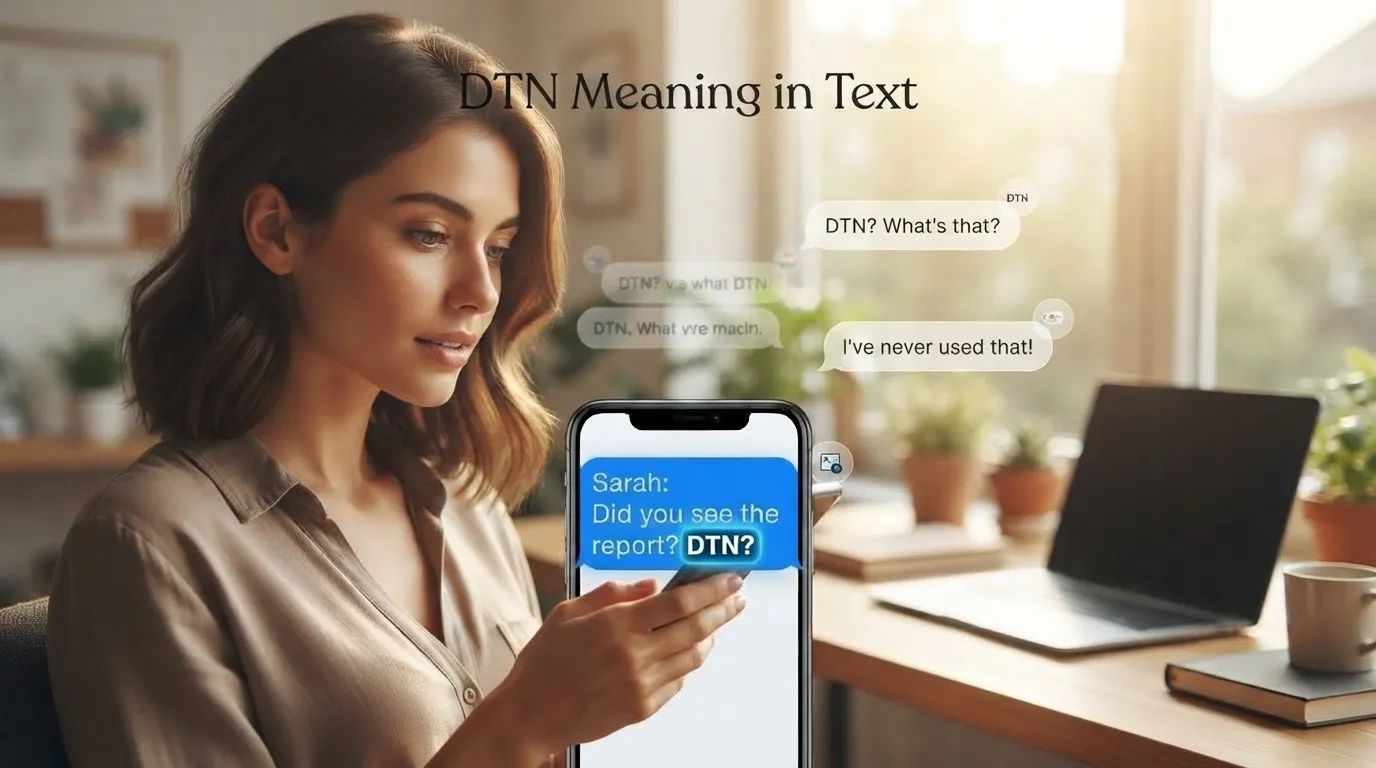
Have you ever received a message that simply says DTN and wondered what the person means? Texting abbreviations can save time, but they can also be confusing when you do not know the slang.
DTN commonly means Don’t Trust Nobody or Don’t Trust No One in casual texting and social media. People often use it when talking about trust, betrayal, friendships, relationships, or difficult experiences. However, DTN can have other meanings depending on the conversation.
For example, someone talking about a secret might use DTN to mean Don’t Tell Nobody. In some dating or casual online conversations, it can also mean Down to Netflix.
That is why context matters. Understanding DTN meaning in text can help you avoid confusion when chatting with friends, using social media, playing games, or meeting people online. In this guide, you will learn the common meanings of DTN, how people use it, similar abbreviations, and how to respond.
What Does DTN Mean in Text?

The most common slang meaning of DTN is Don’t Trust Nobody or Don’t Trust No One. It expresses caution about trusting other people.
For example:
Alex: I told him something private, but he told everyone.
Sam: That’s why DTN.
Here, DTN means that people should be careful about whom they trust.
It can appear in conversations about:
- Friendship problems
- Relationship issues
- Betrayal
- Secrets
- Personal boundaries
- Social media drama
- Disappointment
Other Meanings of DTN
DTN does not have one fixed meaning everywhere. Don’t Tell Nobody is another documented interpretation. It is usually used when someone asks another person to keep information private.
Mia: I bought your birthday gift already.
Lena: Really?
Mia: DTN!
In this example, DTN means Don’t Tell Nobody.
Another informal interpretation is Down to Netflix, which can appear in casual or dating conversations.
Chris: What are you doing tonight?
Taylor: DTN?
Here, the meaning may be Down to Netflix?
Therefore, you should always look at the surrounding words before deciding what DTN means.
Background and History of DTN
DTN comes from the broader culture of internet and texting abbreviations. As mobile phones, instant messaging, and social media became popular, people began shortening common phrases to communicate faster.
Well-known abbreviations such as LOL, BRB, BTW, TBH, and IDK became part of everyday online communication. At the same time, many less common abbreviations developed within particular communities.
DTN became associated with phrases about trust and caution, especially in social-media conversations. People could express a strong feeling in only three letters.
For example:
Learned my lesson. DTN.
This short message can communicate disappointment without explaining the entire story.
Social media also helped slang spread between communities. An abbreviation that begins in one online group may later become familiar to a much wider audience.
However, DTN is not as universal as abbreviations such as LOL or BTW. Some people may recognize it immediately, while others may have never seen it before.
This is why DTN meaning in text depends heavily on context.
How DTN Is Used in Different Contexts
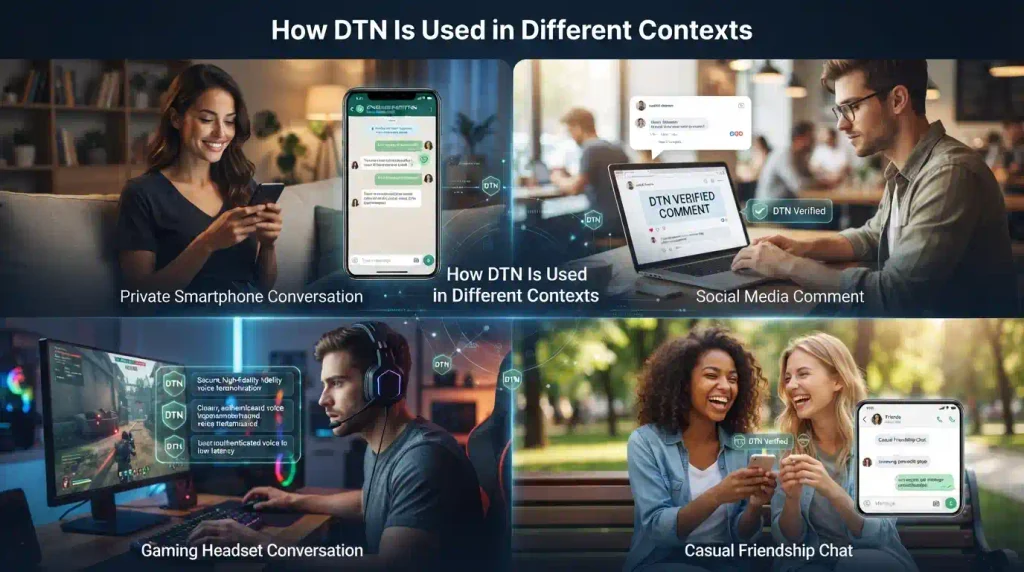
DTN can appear in many informal online conversations.
DTN in Text Messages
Friends may use DTN after discussing betrayal or trust.
A: She promised not to tell anyone.
B: And she told everyone?
A: Yep.
B: DTN.
The meaning here is Don’t Trust Nobody.
DTN on Social Media
People may use DTN in captions, comments, or posts about personal experiences.
Protect your peace. DTN.
This usually suggests being careful about trusting people.
DTN in Relationships
Someone who has experienced dishonesty may use DTN when discussing relationships.
After everything that happened, DTN.
The phrase communicates a guarded attitude toward trust.
DTN and Secrets
If the conversation involves private information, DTN may mean Don’t Tell Nobody.
I have a surprise planned. DTN!
The context makes the intended meaning clearer.
DTN in Gaming
Gaming communities use many abbreviations because players need to communicate quickly. However, DTN is not a universal gaming term.
If you see it in a game chat, check the surrounding messages before interpreting it.
Common Misconceptions About DTN
One common misconception is that DTN always means Don’t Trust Nobody. This is not necessarily true.
The abbreviation has multiple documented uses, so context should always be considered.
DTN Does Not Always Mean Distrust
If someone writes:
I have something to tell you. DTN.
they may mean Don’t Tell Nobody.
DTN Is Not Only Used on One Platform
You may see DTN in text messages, social media, group chats, comments, and other online communities.
DTN Is Not Always Negative
The trust-related meaning can sound negative or guarded. However, Down to Netflix has a more casual meaning.
It Is Fine to Ask
If someone sends DTN and you cannot understand it, simply ask:
What does DTN mean here?
That is better than making the wrong assumption.
Similar Terms and Alternatives
Several abbreviations can express ideas similar to DTN.
| Term | Meaning | Main Use |
| DTN | Don’t Trust Nobody | Trust and relationships |
| DTA | Don’t Trust Anyone | General caution |
| TNO | Trust No One | Distrust |
| DTN4L | Don’t Trust No One For Life | Strong distrust |
| TBH | To Be Honest | Honest opinion |
| BTW | By The Way | Adding information |
| IDK | I Don’t Know | Uncertainty |
If your goal is clear communication, phrases such as be careful who you trust or please keep this private are easier to understand than DTN.
How to Respond to DTN
Your response should depend on the meaning and tone.
Casual Response
If a friend uses DTN to talk about trust:
Yeah, I understand. People can surprise you.
Funny Response
With a close friend, you could say:
DTN? Trust level officially set to zero 😂
Supportive Response
If the person is upset:
I’m sorry that happened. Take some time before trusting again.
Clarifying Response
If you do not understand:
Wait, what does DTN mean?
Professional Response
At work, you can ask:
Could you clarify what you mean by DTN?
This keeps the conversation clear and professional.
Regional and Cultural Differences
Internet slang can vary between countries and online communities. People who frequently use social media may recognize DTN quickly, while someone who mainly uses formal English may not know it.
The phrase Don’t Trust Nobody is particularly associated with informal English-language internet slang. However, slang can spread widely across countries through social media, music, gaming, and online communities.
The meaning can also change between groups.
For example, one group may use DTN to mean:
Don’t Trust Nobody.
Another person may use it to mean:
Don’t Tell Nobody.
Therefore, cultural background and online community can affect how an abbreviation is understood.
DTN vs. Similar Text Abbreviations
DTN can easily be confused with other short forms.
| Abbreviation | Common Meaning | Example |
| DTN | Don’t Trust Nobody | DTN after what happened. |
| DTA | Don’t Trust Anyone | DTA these days. |
| TNO | Trust No One | TNO. |
| TBH | To Be Honest | TBH, I agree. |
| BTW | By The Way | BTW, call me later. |
| TY | Thank You | TY for helping. |
| IDK | I Don’t Know | IDK what happened. |
The important thing is that similar-looking abbreviations can have completely different meanings.
DTN in Online Communities and Dating Apps
DTN can appear in social-media conversations, online communities, and dating-related chats. The meaning depends heavily on the topic.
On social media, it may appear in posts about relationships, friendships, betrayal, or personal boundaries.
New chapter. Less drama. DTN.
In this context, the trust-related meaning is likely.
Dating conversations require more attention because DTN can also be interpreted as Down to Netflix in some casual contexts.
For example:
DTN tonight?
could mean Down to Netflix tonight?
If you are unsure, ask before responding.
Gaming communities can also use abbreviations differently. A term that has one meaning in a relationship discussion may have another meaning in a gaming group.
The best rule is simple: read the whole conversation before interpreting DTN.
Hidden or Offensive Meanings of DTN

DTN does not have one universally accepted offensive meaning in everyday texting. However, the phrase behind an abbreviation can sometimes sound harsh.
Don’t Trust Nobody may express strong distrust. If directed at a particular person, it can sound dismissive or hostile.
For example:
DTN. Everyone is fake.
has a more negative tone than:
I need to be more careful about who I trust.
Tone also matters. Emojis, punctuation, and previous messages can change how DTN feels.
DTN 😂
may be joking, while:
DTN. Never again.
may be serious.
So, do not judge the meaning from the three letters alone.
Is DTN Appropriate for Professional Communication?
DTN is generally better avoided in professional communication. It is informal and has multiple meanings.
If you write:
DTN.
to a coworker, they may not know what you mean.
Instead, use a complete phrase.
For privacy, write:
Please keep this information confidential.
For caution, write:
Please be careful when sharing this information.
For clarification, write:
Could you please explain what you mean?
Clear wording is especially important in emails, reports, applications, and business conversations.
FAQs About DTN Meaning in Text
1. What does DTN mean in text?
DTN commonly means Don’t Trust Nobody or Don’t Trust No One. It is usually used to express caution about trusting people.
2. What does DTN mean on social media?
On social media, DTN often refers to Don’t Trust Nobody, especially in posts about relationships, betrayal, or friendships.
3. Can DTN mean Don’t Tell Nobody?
Yes. In conversations about secrets or private information, DTN can mean Don’t Tell Nobody.
4. What does DTN mean in dating?
In dating conversations, DTN can refer to Don’t Trust Nobody. In some casual contexts, it may also mean Down to Netflix.
5. Is DTN rude?
DTN is not automatically rude. However, the trust-related meaning can sound negative or guarded depending on the situation.
6. What should I say if I don’t understand DTN?
You can simply ask:
What do you mean by DTN?
This avoids misunderstanding.
7. Should I use DTN at work?
It is better to avoid uncommon slang at work. Use the complete phrase so your message is clear.
Conclusion
DTN meaning in text most commonly refers to Don’t Trust Nobody or Don’t Trust No One. People use it in casual conversations, social media posts, relationship discussions, and other online spaces to express caution about trusting others.
However, DTN can have other meanings. It may mean Don’t Tell Nobody when someone is discussing private information. In some casual dating contexts, it can also refer to Down to Netflix.
The key is context. Look at the full conversation, the topic, and the tone before deciding what DTN means. If you are unsure, simply ask the sender. For professional communication, using complete words instead of DTN is usually clearer and safer.

Mafia Noor is an experienced content writer and author at BuzzVera.com, with 3 years of experience creating helpful and easy-to-understand content. Mafia specializes in texting slang, internet abbreviations, modern expressions, and text meanings, helping readers understand today’s digital language clearly and confidently.