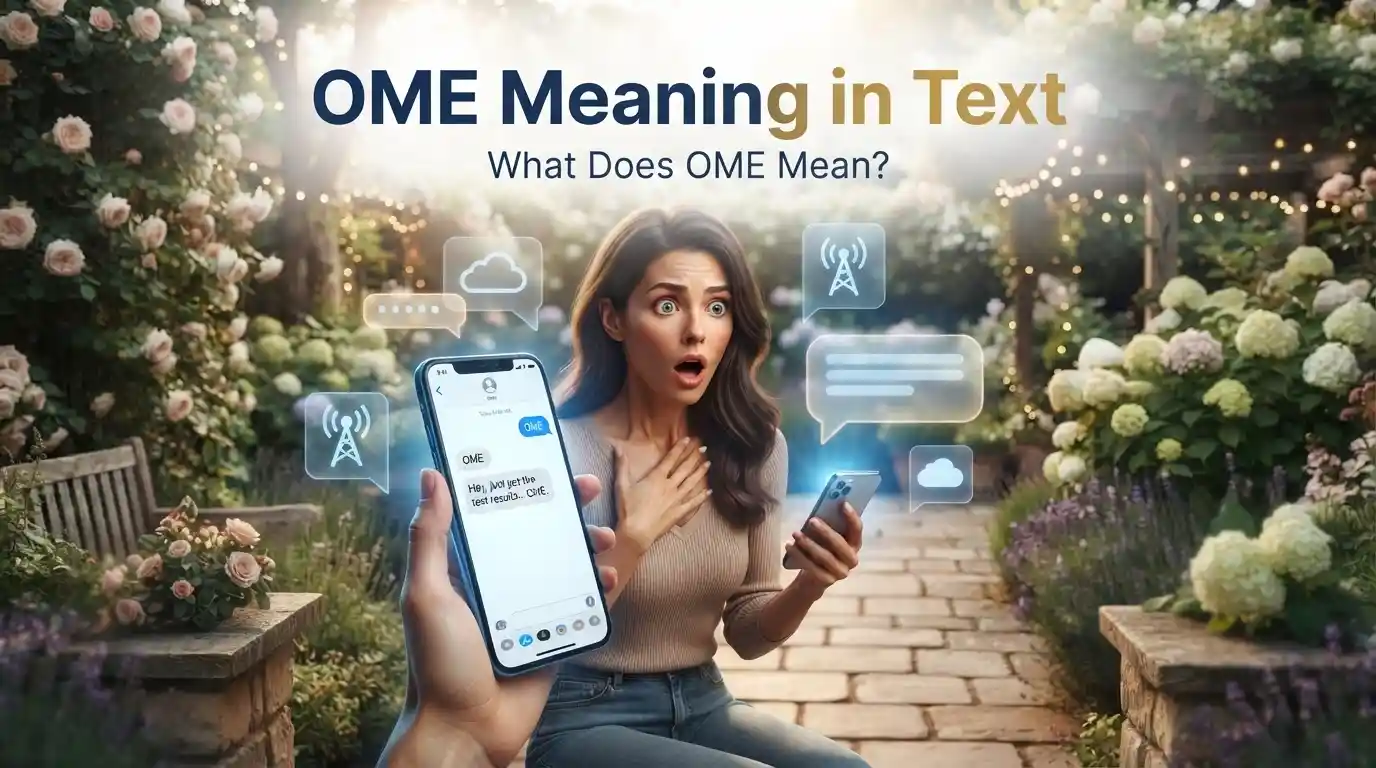
Ever gotten a text that just said OME and had no idea what it meant? You’re not alone. Slang like this pops up fast in group chats, comments, and DMs. It can feel confusing if you’re new to it.
OME is short for Oh My Excuse or, more commonly, Oh My Ends in British slang a phrase used to react to something shocking, funny, or dramatic. In some contexts, it can also stand for other things depending on region and platform.
This term shows up often in texting, social media comments, gaming chats, and casual conversations between friends. Understanding it helps you keep up with fast-moving conversations and avoid feeling lost when slang flies around. It also helps you respond the right way, If you’re chatting with friends or seeing it in a comment section for the first time.
OME Meaning in Text: Definition and Real Examples

At its core, OME is a reaction phrase. People use it the way they’d use OMG or no way as a quick burst of surprise or amusement.
In British English slang (especially UK youth slang), OME most often stands for Oh My Ends, where ends refers to someone’s neighborhood or home turf. It’s used to react to gossip, drama, or funny local news.
Here’s how it might look in a real conversation:
Jade: did u hear what happened outside the chicken shop last night 😭 Leah: OME no way, tell me everything
Sam: bro just tripped in front of the whole class Alex: OME 😂💀
In these examples, OME works as a stand-alone reaction. It doesn’t need extra words to make sense the context and tone carry the meaning.
Some people also use OME loosely to mean oh my, treating it as a shortened, punchier version of longer exclamations. The exact meaning can shift slightly based on who’s texting and where they’re from.
Where Did OME Come From? A Quick History

Slang terms like OME usually start small inside one friend group, school, or region before spreading online.
Ends has long been UK slang for one’s neighborhood, especially in London youth culture and grime music lyrics. Over time, Oh My Ends became a natural extension: a way to react to something happening close to home, almost like saying that’s wild, that’s near me.
As with most abbreviations, texting and social media sped up its spread. TikTok comments, Snapchat captions, and group chats compress phrases into quick letters. OME fit naturally into that shorthand culture, especially among UK teens and young adults.
Today, OME is used well beyond just talking about someone’s neighborhood. It’s become a general-purpose reaction to anything surprising, funny, or dramatic much like how LOL outgrew its literal meaning of laughing out loud.
How People Use OME in Texting, Gaming, and Social Media

OME shows up across different platforms, and the tone shifts slightly depending on where you see it.
In texting:
Mia: did u see the group chat drama today Dan: OME yes it wasreckless
On social media (comments/captions): A comment under a dramatic video might simply read OME 😭 no other explanation needed. The reaction speaks for itself.
In gaming chats:
Player1: just clutched a 1v4 Player2: OME that’s mistaken
In casual conversation between friends: It often replaces a full sentence. Instead of typing oh wow, that’s shocking, someone just types OME and moves on.
Across all these contexts, OME functions as a quick emotional stamp on a message. It’s less about literal meaning and more about tone surprise, amusement, or disbelief.
Common Misconceptions & Clarifications

Because OME is short, people often assume it’s a typo or confuse it with other similar-looking abbreviations. Here are a few common mix-ups:
- Mistaking OME for OMG: They’re used similarly, but OME has UK slang roots tied to ends, while OMG is a universal, older abbreviation.
- Assuming it’s always about a neighborhood: While the phrase originally referenced ends, most casual users today use it as a general reaction word without thinking about the literal meaning.
- Thinking it’s rude or aggressive: OME isn’t inherently negative. It’s usually neutral to positive, expressing shock, amusement, or disbelief rather than anger.
- Believing it’s only used by one age group: While it’s most common among younger, UK-influenced texting circles, the term has spread internationally through social media.
If you see OME and aren’t sure of the tone, check the surrounding message or emojis. A 😭 or 💀 usually signals humor, while a plain OME with no punctuation can mean genuine surprise.
Words Similar to OME (And When to Use Them Instead)
Several other abbreviations serve a similar purpose. Here’s how they compare:
| Term | Meaning | Best Used For |
| OMG | Oh My God | Universal shock or excitement |
| OME | Oh My Ends | UK slang reaction to drama or surprise |
| SMH | Shaking My Head | Disappointment or disbelief |
| DED | Dead (from laughing) | Something extremely funny |
| WTF | What The… | Confusion or shock, often stronger tone |
| NGL | Not Gonna Lie | Adding honesty to a statement |
If you’re texting someone unfamiliar with UK slang, OMG or no way might translate better. OME works best with friends who already know the term.
How to Respond to This Term
How you respond to OME depends on your relationship with the sender and the setting.
Casual response:
OME right?? I couldn’t believe it either
Funny response:
OME 💀 I’m actually screaming
Professional response: Since OME is informal slang, it’s best avoided in professional messages entirely. If a colleague uses it casually, a simple Ha, wild! or That’s surprising! keeps things friendly without matching overly casual tone.
Privacy-conscious response: If someone shares something personal and reacts with OME, a safe response is:
Oh no, are you okay? or That sounds like a lot, want to talk about it?
This shows you’re paying attention without oversharing your own reaction.
Does OME Mean the Same Thing Everywhere? Regional Differences
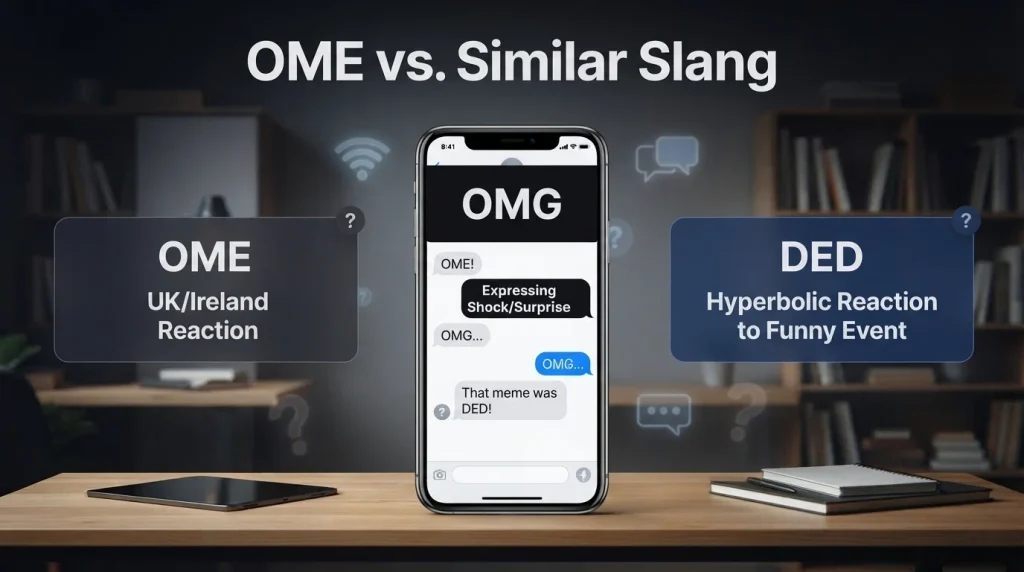
OME is heavily rooted in UK slang, particularly among younger people influenced by London youth culture and grime/drill music. In these circles, ends specifically means one’s neighborhood or local area.
Outside the UK, the term is less common and often unfamiliar. American texting culture, for example, leans more on OMG, no cap, or fr fr for similar reactions.
That said, social media has blurred these regional lines. TikTok and Instagram comments spread UK slang to global audiences quickly, so it’s increasingly common to see OME used by people outside the UK who picked it up from viral content, even if they don’t know its literal origin.
OME vs. Similar Slang Terms: A Side-by-Side Comparison
| Feature | OME | OMG | DED |
| Origin | UK youth slang | General English | Internet/gaming slang |
| Formality | Very informal | Informal | Very informal |
| Common Platforms | Texting, TikTok, gaming | All platforms | Gaming, social media |
| Regional Strength | Strongest in UK | Global | Global |
| Tone | Surprise, drama reaction | Shock, excitement | Extreme humor |
While these terms overlap in function, OME carries a distinctly British flavor that sets it apart from more globally recognized reactions like OMG.
How OME Is Used on Dating Apps and Online Communities
On dating apps like Tinder or Bumble, OME might show up when someone shares a funny or surprising story during a conversation. For example:
Match: so on my last date the guy brought his mom 😭 You: OME no way, what did you do
It works well here because it keeps the tone light and playful ideal for early conversations where you don’t want to seem overly serious.
On Twitter/X, OME often appears in reply threads reacting to viral posts, especially UK-based content. In gaming communities, particularly voice or text chats tied to UK-based servers, it’s used the same way as in texting: a quick reaction to an unexpected play or event.
Tip for responding appropriately: Match the energy. If someone uses OME casually, respond with similarly casual language rather than a long, formal reply.
Does OME Have a Hidden or Offensive Meaning?

For the most part, OME is harmless. It’s a reaction word, not an insult or slur. However, context always matters.
Since ends can reference someone’s neighborhood, and neighborhood-related slang sometimes ties into gang culture references in UK grime lyrics, some listeners might read deeper meaning into it depending on the conversation. In everyday texting between friends, though, this connotation rarely applies.
Tone and punctuation matter too. OME with a laughing emoji reads as playful, while OME. with a period and no emoji might come across as more serious or even sarcastic, depending on the relationship between the people texting.
Is OME Appropriate for Professional Communication?
No OME is casual slang and doesn’t belong in professional emails, workplace messages, or formal documents. Using it in a work setting could come across as unprofessional or confusing to colleagues unfamiliar with the term.
Professional alternatives:
- That’s surprising.
- Wow, I wasn’t expecting that.
- That’s quite a story.
If you’re texting a coworker in a more relaxed, informal context (like a team group chat), occasional slang might be fine but it’s safer to read the room first.
FAQs About OME Meaning in Text
1. What does OME stand for in texting? OME most commonly stands for Oh My Ends, a UK slang phrase used to react to surprising or dramatic news.
2. Is OME the same as OMG? They serve a similar purpose as reaction phrases, but OME has UK slang roots while OMG is a more universal, longstanding abbreviation.
3. Is OME rude or offensive? No, OME is generally neutral to positive. It expresses surprise or amusement rather than insult.
4. Where is OME most commonly used? It’s most popular in the UK, especially among younger texters, but has spread internationally through social media.
5. Can I use OME in a professional message? It’s best avoided in professional settings since it’s very informal slang.
6. Does OME only relate to neighborhoods? Not anymore. While it originally tied to ends (neighborhood), most people now use it as a general surprise reaction.
7. How do I respond if someone texts me OME? Match their tone a casual reply like I know, right? or a laughing emoji usually works well.
conclusion
OME is a great example of how slang evolves from specific cultural roots into everyday shorthand. Starting as UK slang tied to ends, it has grown into a flexible reaction word used across texting, gaming, and social media.
Knowing what OME means and when to use it helps you keep conversations natural and avoid confusion. If you’re chatting with friends, replying to a comment, or matching on a dating app, using slang like this appropriately shows you’re in tune with how people actually talk today.
Read More
PR Meaning in Text

Mahi Aylin is a content writer and author at BuzzVera.com, with 3 years of writing experience. She specializes in texting slang, internet abbreviations, modern expressions, and text meanings, creating simple and easy-to-understand content that helps readers confidently navigate today’s digital language.





1 thought on “OME Meaning in Text: Definition, Uses, and Common Contexts<p class="post-updated-date">🕓 <span class="updated-label">Last updated on</span> <time datetime="2026-09-29T07:37:47+00:00">September 29, 2026</time></p><script type="application/ld+json"> { "@context": "https://schema.org", "@type": "BlogPosting", "mainEntityOfPage": { "@type": "WebPage", "@id": "https://buzzvera.com/ome-meaning-in-text/" }, "datePublished": "2026-09-14T14:08:52+00:00", "dateModified": "2026-09-29T07:37:47+00:00" } </script>”