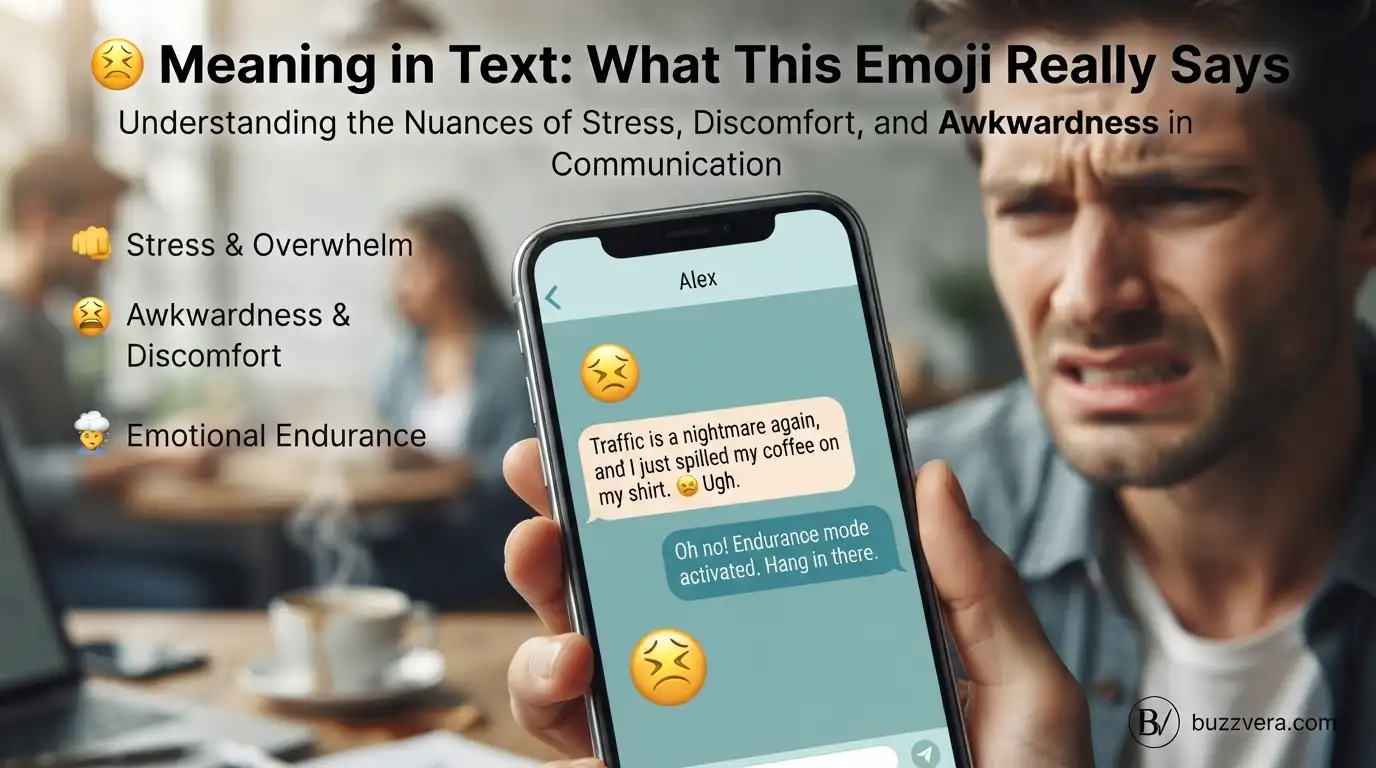
You send a stressful update. A friend replies with just 😣. No words. Just that scrunched-up face. You know instantly how they feel.
😣 is the persevering face emoji. It shows tightly shut eyes, a clenched expression, and a mouth pressed together the universal look of someone pushing through discomfort, stress, or secondhand embarrassment.
You’ll see it everywhere texting, Instagram comments, TikTok reactions, work chats, and gaming. It captures a very specific feeling: this is hard, but I’m getting through it or oof, that’s rough to watch.
Understanding 😣 matters because it carries more nuance than it looks. It’s not quite sad, not quite angry it’s somewhere in between discomfort and quiet endurance. Misreading it can make you miss what someone’s really trying to say.
This guide breaks down exactly what 😣 means, where it came from, and how to respond to it well.
What Does 😣 Mean in Text?
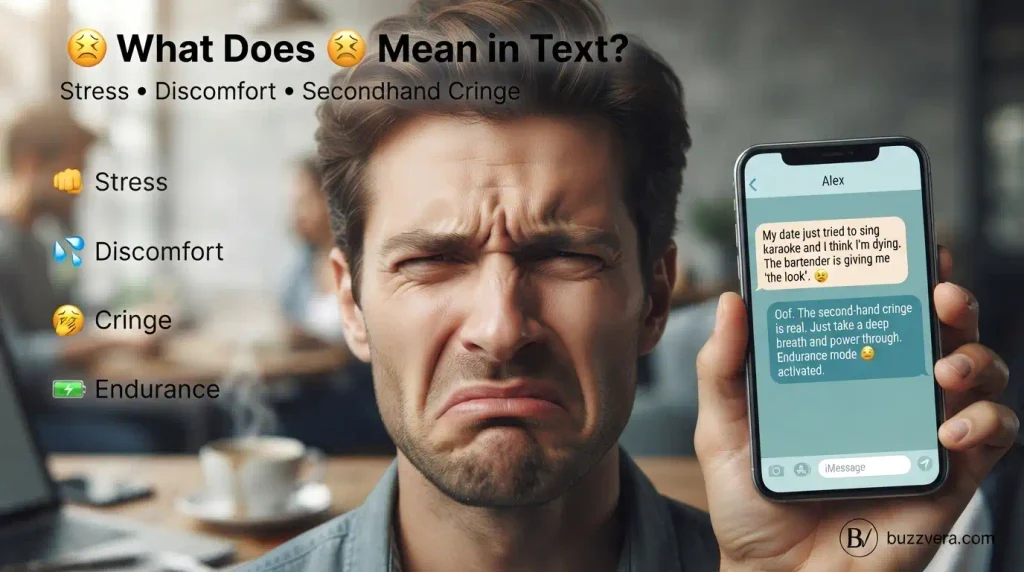
😣 is officially called the persevering face. It shows a scrunched, strained expression eyes shut tight, mouth clenched like someone gritting their teeth through something difficult.
In texting, it usually means: this is uncomfortable, stressful, or hard to deal with, but I’m pushing through.
Key point: 😣 = discomfort, stress, or secondhand cringe not full sadness or anger.
Real examples in text
Example 1 Stressful day
Jade: how’s the move going?
You: 😣 everything that could go wrong has gone wrong
Example 2 Secondhand embarrassment
Friend: he texted his boss love you by accident
You: 😣😣😣 i’m cringing for him
Example 3 Pushing through something hard
You: exam’s in an hour and i haven’t slept
Friend: 😣 you got this though
The emotional range of 😣
Depending on the message, 😣 can mean:
- Stress or overwhelm this is a lot right now
- Secondhand embarrassment that’s painful to watch
- Physical discomfort this hurts or I’m struggling through this
- Bracing for bad news I’m not ready to hear this
Key point: 😣 sits in a unique emotional space not quite crying, not quite angry, just genuinely uncomfortable.
Where Did the 😣 Emoji Come From?

The persevering face has been around since the very early days of emoji, and its meaning has shifted subtly over time.
Early emoji origins
😣 was part of the original Unicode emoji set released in 2010, based on earlier Japanese emoji designs used on mobile phones in Japan during the late 1990s and early 2000s.
In Japanese mobile culture, this expression was closely tied to feelings of effort, endurance, or quiet struggle a face someone makes while powering through something difficult.
The global spread
As emoji spread worldwide through smartphones in the early-to-mid 2010s, 😣’s meaning broadened. English-speaking users began using it less for effort and more for general discomfort, stress, and secondhand embarrassment.
The rise of cringe culture
By the late 2010s, as internet culture developed a strong vocabulary around cringe and secondhand embarrassment, 😣 became a go-to reaction for exactly that feeling watching something awkward unfold and physically reacting to it.
Where 😣 lives today
- Texting reacting to stress or discomfort
- Social media comments reacting to cringe or awkward content
- Gaming chats reacting to a rough moment or mistake
- Group chats expressing secondhand embarrassment about gossip or drama
Fun fact: 😣 is often confused with similar struggling emojis, but its strained, scrunched expression makes it distinct from ones that show crying or shouting.
How 😣 Is Used in Different Contexts
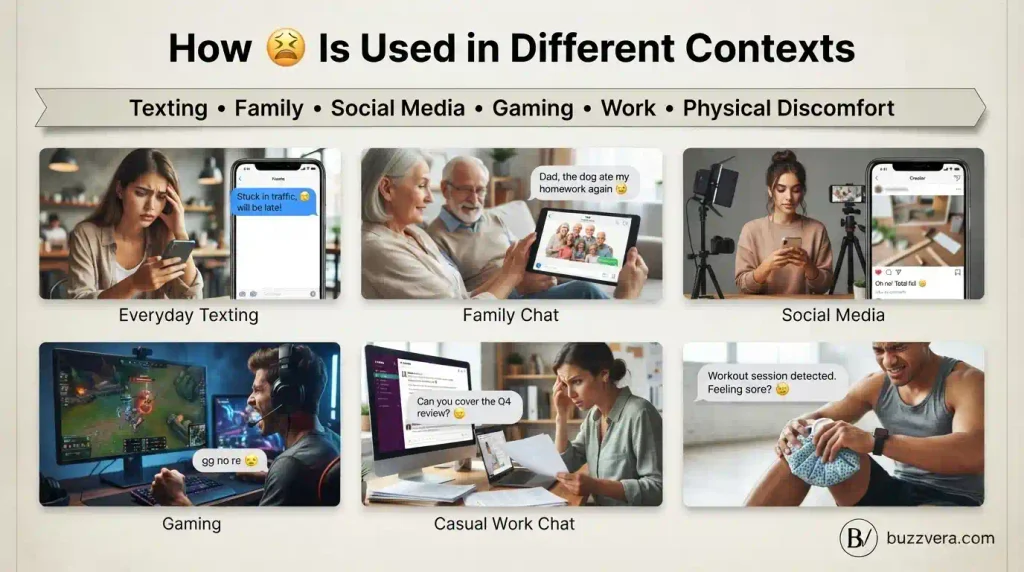
The core feeling stays consistent, but the situations shift depending on where it shows up.
In everyday texting
The most common use reacting to stress or a hard day.
Sam: work has been ridiculous this week
You: 😣 i feel that, hang in there
With family
Often used to express empathy during a hard moment.
Mom: the doctor’s appointment didn’t go how i hoped
You: 😣 i’m so sorry, want to talk about it?
On social media
Used in comments reacting to cringe, awkward, or secondhand-embarrassing content.
Post: he showed up to the wrong wedding
Comment: 😣😣😣 i can’t
In gaming
Common reaction to a rough moment, close call, or frustrating mistake.
Teammate: i almost won that but choked at the last second
Chat: 😣 so close
In casual work chats
Sometimes used to express mild overwhelm in relaxed workplace settings.
Coworker: three deadlines all landed on the same day 😣
You: rough, let me know if i can help with anything
As a physical reaction
Sometimes used to describe literal physical discomfort, not just emotional stress.
You: 😣 pulled a muscle at the gym, everything hurts
Key point: 😣 works well anywhere someone is expressing discomfort, stress, or secondhand cringe casual settings across the board.
Common Misconceptions About 😣
Let’s clear up a few things people often get wrong.
Myth 1: 😣 means the same thing as crying emojis
Not true. 😣 shows strain and discomfort, not tears. It’s closer to gritting your teeth than breaking down.
Myth 2: 😣 always means something bad happened to the sender
Not always. It’s often used to react to someone else’s situation, especially secondhand embarrassment.
Friend: i just watched my coworker completely blank in a meeting
You: 😣 painful
Myth 3: 😣 is an angry emoji
No. While the expression looks intense, it doesn’t signal anger it signals discomfort, stress, or empathy.
Myth 4: 😣 and 😖 mean exactly the same thing
Close, but not identical. 😖 (confounded face) often leans more toward frustration or being overwhelmed, while 😣 leans more toward enduring discomfort or secondhand cringe.
Myth 5: 😣 has a hidden or different meaning
In everyday use, no. Its meaning stays fairly consistent across most contexts: discomfort, stress, or cringe.
When it could be misread
If someone sends 😣 with no context, it can be unclear If they’re stressed, uncomfortable, or reacting to something else entirely.
Text: 😣
You: everything okay? what happened?
Key point: When the meaning feels unclear, a quick check-in clears things up fast.
Similar Emojis and Alternatives
😣 has a few emoji cousins that express related, but slightly different, feelings.
| Emoji | Meaning | Feel |
| 😣 | Persevering face | Strained, enduring discomfort |
| 😖 | Confounded face | Frustrated, overwhelmed |
| 😫 | Tired face | Exhausted, worn out |
| 😩 | Weary face | Overwhelmed, I can’t even |
| 🥴 | Woozy face | Dizzy, overwhelmed differently |
| 😬 | Grimacing face | Awkward, cringing |
| 😭 | Loudly crying | Full emotional overwhelm |
Notes on the close ones
😬 feels closer to yikes, that’s awkward often paired with cringe reactions similar to 😣, but slightly lighter.
Text: i accidentally called my teacher mom 😬
😫 and 😩 lean more toward exhaustion or being completely overwhelmed, rather than gritting through discomfort.
Text: three exams this week 😩 i’m so tired
😖 feels a touch more frustrated, often paired with confusion or annoyance rather than pure discomfort.
Key point: Swap 😣 for 😬 when the moment feels more awkward than stressful, or 😩 when it’s more about exhaustion than endurance.
How to Respond to 😣
Your reply depends on what caused the reaction.
1. Casual and supportive
Simple, warm, and reassuring.
Them: 😣 today has been a lot
You: i’m sorry, want to vent about it?
2. Funny reply
Works well for lighter, cringe-related moments.
Them: 😣 i just tripped in front of my whole class
You: we’ve all been there, you’ll laugh about it later
3. Reassuring reply
Good when someone seems stressed or overwhelmed.
Them: 😣 i don’t think i studied enough for this test
You: you’ve got this, you’ve prepared more than you think
4. Professional reply
If 😣 shows up in a relaxed work chat, acknowledge it while staying supportive.
Coworker: 😣 today’s been rough
You: Sorry to hear that let me know if there’s anything I can take off your plate.
5. Privacy-conscious or neutral reply
If you’re unsure what’s going on, a simple check-in works well.
Them: 😣
You: everything okay?
Key point: 😣 usually invites empathy, not solutions sometimes just acknowledging the feeling is enough.
Regional and Cultural Differences
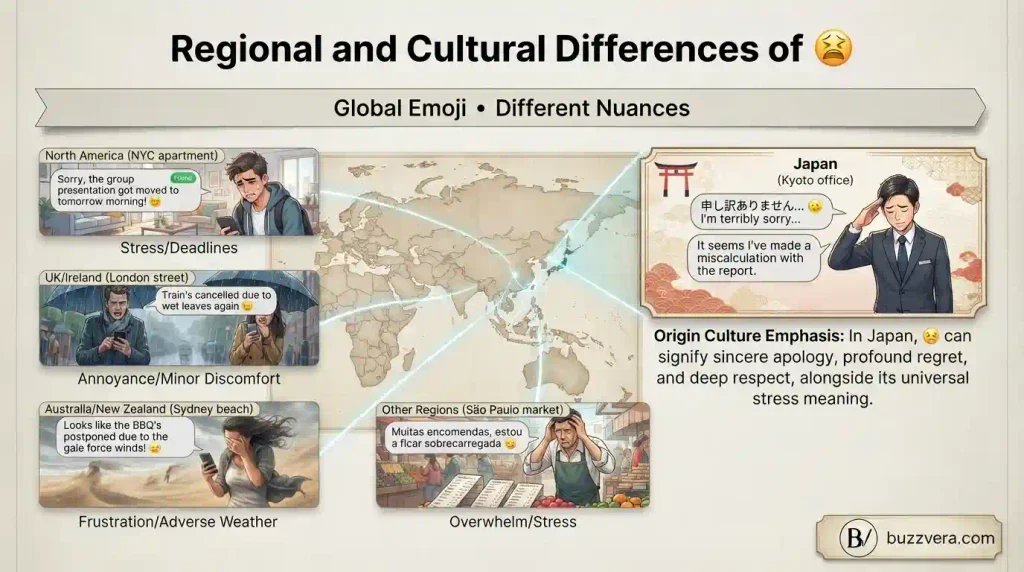
Since emoji meanings tend to translate visually, 😣 is understood fairly consistently across regions with a few nuances.
United States and Canada
Very commonly used in texting and social media, especially for stress, cringe reactions, and secondhand embarrassment.
United Kingdom and Ireland
Similarly common, often paired with dry humor when reacting to awkward situations.
Australia and New Zealand
Widely used the same way, especially in casual texting between friends.
Japan (origin culture)
Since this emoji has roots in Japanese mobile culture, it’s sometimes used slightly differently closer to expressing quiet effort or ganbatte (enduring through something), rather than purely cringe reactions.
Non-English-speaking regions
In most countries, the facial expression itself communicates the feeling clearly, even without needing direct translation a benefit of visual emoji communication.
| Region | 😣 usage |
| USA / Canada | Very high |
| UK / Ireland | High |
| Australia / NZ | High |
| Japan | High, slightly different nuance |
| Other regions | Medium-high, visually understood |
Key point: The strained expression reads clearly across most cultures, even if the exact emotional nuance shifts slightly by region.
😣 Compared With Similar Emojis
| Emoji | Meaning | Tone | Best for |
| 😣 | Persevering face | Strained discomfort | Stress, cringe, enduring something |
| 😖 | Confounded face | Frustrated | Overwhelm, confusion |
| 😫 | Tired face | Exhausted | Physical/mental fatigue |
| 😩 | Weary face | Overwhelmed | I can’t even moments |
| 😬 | Grimacing face | Awkward | Cringe, secondhand embarrassment |
The quick read
- Is it about enduring stress? → 😣 fits well
- Is it about being overwhelmed or tired? → 😩 or 😫 fit better
- Is it purely awkward or cringe? → 😬 might fit slightly better
- Is it frustration or confusion? → 😖 is closer
😣 in Online Communities and Dating Apps
On dating apps
😣 occasionally shows up when someone shares something stressful or slightly awkward early in a conversation.
Match: 😣 sorry, work has been ridiculous, i’m bad at replying quickly right now
You: no worries at all, i totally get it
It signals honesty about a rough patch without needing a long explanation.
On Twitter/X and TikTok
Very commonly used in comments reacting to cringe, secondhand embarrassment, or relatable stress content.
Post: just remembered something embarrassing from 2016
Comment: 😣😣😣 stop it’s too real
In gaming communities
Used to react to close calls, mistakes, or generally rough moments during matches.
Chat: we were SO close to winning
Teammate: 😣 next time for sure
Tips for responding appropriately
- On dating apps, respond with empathy rather than jumping to fix the situation.
- In social media comments, matching the same relatable, light energy works well.
- In gaming chats, a quick acknowledgment keeps the pace natural.
Match: 😣 today was a lot, sorry if i seem distracted
You: totally understandable, no pressure at all
Key point: 😣 usually invites empathy and patience a good response rarely needs to be complicated.
Hidden or Offensive Meanings
Good news 😣 is a low-risk, widely understood emoji.
The straightforward truth
😣 has no offensive or hidden meaning. It’s designed to express discomfort, stress, or secondhand cringe nothing inappropriate or harmful.
The one nuance to know
While rare, 😣 can occasionally carry a slightly more serious tone if it follows a message about real physical or emotional pain, rather than casual stress.
Text: 😣 my back has been killing me all week
You: that sounds rough, have you been able to rest at all?
Here, the emoji reflects genuine discomfort rather than lighthearted cringe.
When context matters most
If 😣 follows a serious or heavy message, it’s worth responding to the situation itself, not just the emoji.
Not ideal: lol 😣
Better fit: 😣 that sounds really hard, i’m here if you want to talk
Why tone still matters
Compare:
A: 😣 i just watched the most awkward interaction ever
versus
B: 😣 today has been genuinely so hard
A feels light and reactive. B feels more personal and deserves a warmer response.
Key point: 😣 itself carries no risk just make sure your reply matches the weight of what’s actually being said.
Is 😣 Suitable for Professional Communication?
Short answer: use sparingly, and only in relaxed work environments.
Why it doesn’t always fit
- It’s an emotionally expressive emoji, which doesn’t suit formal tone
- It can be misread without clear context in professional settings
- Most formal communication avoids emojis tied to visible discomfort or stress
What to write instead
| Instead of | Write this |
| 😣 today’s been rough | It’s been a challenging day, but I’m managing. |
| 😣 this deadline is a lot | This deadline is tight let me know if adjustments are possible. |
| 😣 sorry for the delay | Apologies for the delay, I appreciate your patience. |
Professional examples
Email: This has been a demanding week, but I’m on track to meet the deadline.
Slack (casual workplace): 😣 today’s been a lot, but almost through it!
The one exception
In casual, close-knit workplaces startups, creative teams, small businesses 😣 between familiar coworkers can feel natural. Read the room first.
Where 😣 is fine
- Texts with friends and family
- Social media comments and captions
- Gaming chats
- Casual, relaxed workplace conversations
Frequently Asked Questions
1. What does 😣 mean in a text?
It shows discomfort, stress, or secondhand embarrassment like gritting your teeth through something hard.
2. Is 😣 the same as crying emojis?
No, 😣 shows strain and endurance, not tears or sadness.
3. Can 😣 be used for physical pain?
Yes, it’s often used to express both emotional stress and physical discomfort.
4. Is 😣 appropriate for work messages?
It fits casual workplace chats, but formal writing should avoid it.
5. What’s the difference between 😣 and 😬?
😣 leans more toward stress or enduring discomfort, while 😬 leans more toward awkward, cringe-specific reactions.
6. Does 😣 always mean something negative happened?
Usually, but not always seriously negative often it just reflects stress, discomfort, or secondhand cringe.
7. How should I respond to 😣?
With empathy first a supportive check-in usually works better than jumping straight to advice.
Conclusion
😣 means discomfort, stress, or secondhand cringe a strained, scrunched expression that captures the feeling of pushing through something hard. Rooted in early Japanese mobile emoji culture, it has grown into a globally recognized reaction for everything from rough days to awkward moments caught on camera.
Across texting, social media, and casual conversation, 😣 signals empathy is needed more than anything else. It’s rarely offensive and almost always calls for a supportive, understanding response rather than a solution.
Now, whenever 😣 shows up in your messages, you’ll know exactly what it means and exactly how to respond with the right amount of care.

Mahi Aylin is a content writer and author at BuzzVera.com, with 3 years of writing experience. She specializes in texting slang, internet abbreviations, modern expressions, and text meanings, creating simple and easy-to-understand content that helps readers confidently navigate today’s digital language.