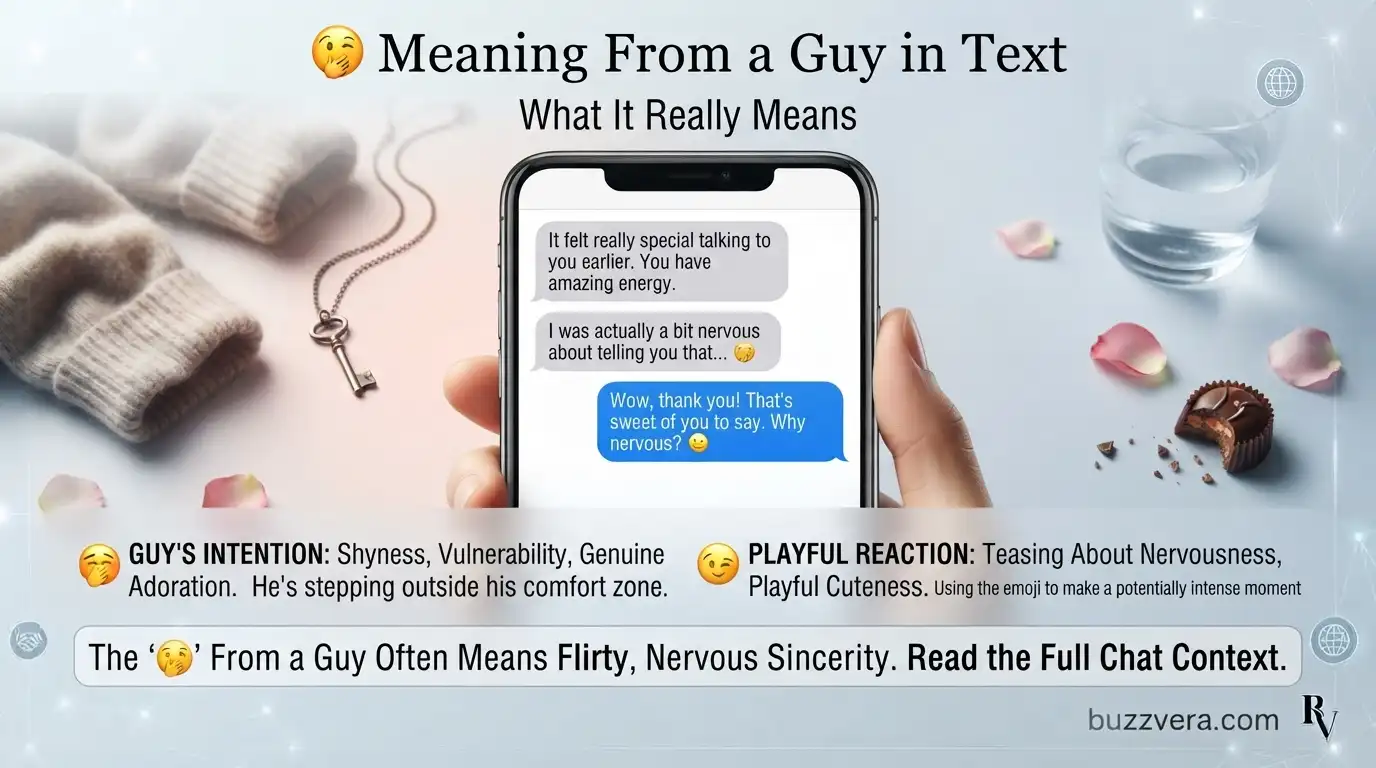
He sends one emoji. No words. Just 🫣. You stare at your screen, trying to decode it.
This little peeking-through-fingers face has become one of the most-used emojis in flirty texting. It shows up after a bold comment, a confession, or a slightly embarrassing moment. It says a lot without saying anything at all.
You’ll see it in texting, Instagram DMs, TikTok comments, and dating apps. Guys especially love using it because it lets them express something shy, flirty, or a little vulnerable without the pressure of typing it out.
Understanding what 🫣 means matters, because it often carries more emotional weight than it looks. Miss the meaning, and you might miss a hint that he’s nervous, into you, or gently teasing you.
This guide breaks down exactly what 🫣 means, where it came from, and how to reply with confidence.
What Does 🫣 Mean in Text?
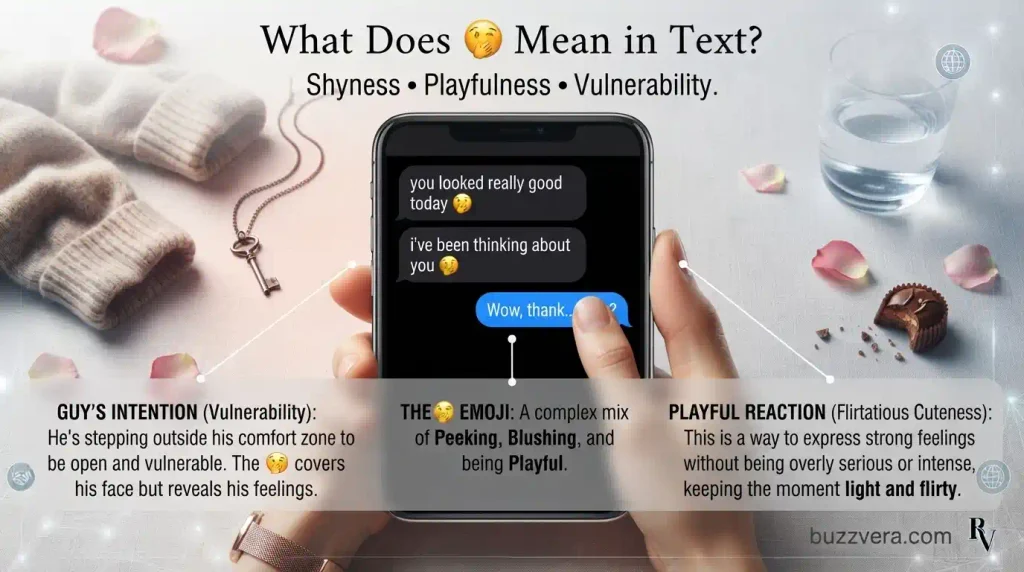
🫣 is the face with peeking eye emoji. Officially, it’s meant to show someone peeking through their fingers like watching something a little scary, awkward, or exciting through half-covered eyes.
In texting, it usually means: I said something bold/embarrassing and I’m a little shy about it.
Key point: 🫣 = a mix of shyness, playfulness, and I can’t believe I just said that.
Real examples in text
Example 1 After a compliment
Him: you looked really good today 🫣
You: stop 😳
Example 2 Admitting something
Him: ngl i’ve been thinking about you a lot lately 🫣
You: wait really?
Example 3 Playful confession
Him: okay i may have looked at your instagram like 5 times today 🫣
You: lol you’re so cute
The emotional range of 🫣
Depending on the message, 🫣 can mean:
- Shy flirting I like you and I’m a little nervous about it
- Playful embarrassment I can’t believe I just admitted that
- Soft teasing I’m watching this unfold and I’m into it
- Cringe humor this is a little awkward but funny
Key point: 🫣 almost never means something negative. It’s a soft, vulnerable emoji the texting version of covering your face while smiling.
Where Did the 🫣 Emoji Come From?
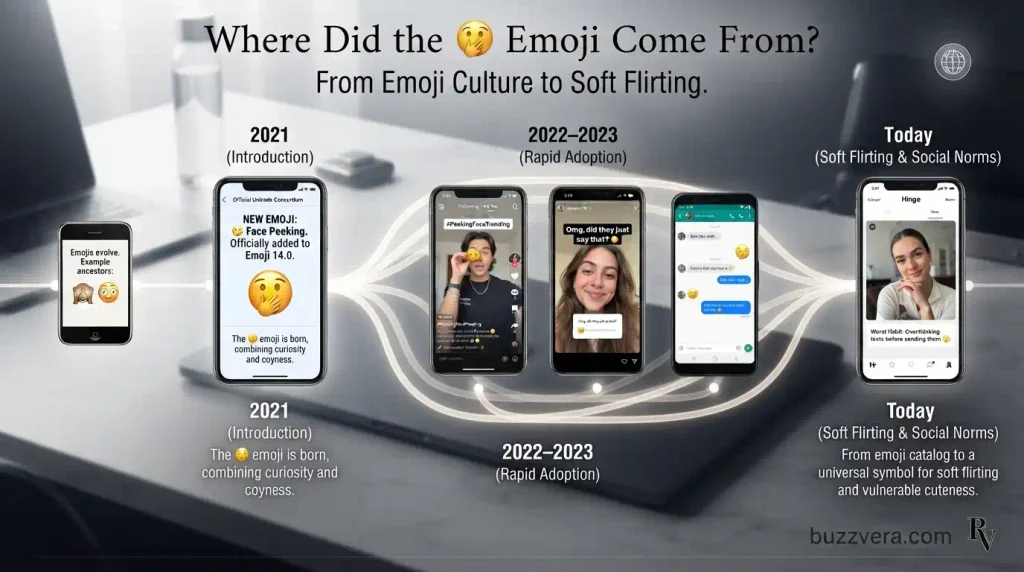
The peeking-eye emoji is newer than you might think, and its rise says a lot about how emoji culture works today.
When it was introduced
🫣 was added to the official emoji list in 2021, as part of a batch of new face emojis meant to capture more specific, nuanced emotions than older classics like 😂 or 😳.
Why it caught on fast
Before 🫣, people had to combine emojis to express shy but excited often stacking 😳 and 🙈. The new emoji gave that exact feeling one single icon.
Once it landed on phones, it spread quickly through:
- TikTok comments, reacting to something bold or awkward
- Instagram DMs, especially in flirty exchanges
- Group chats, reacting to gossip or a confession
- Dating apps, softening a bold message
The shift toward flirty texting
By 2022–2023, 🫣 became closely tied to flirty or vulnerable texting, especially from guys who wanted to say something honest without sounding too intense.
It filled a specific gap: somewhere between a confident wink 😏 and a shy blush 😳.
Where it lives today
- Texting between people who like each other
- Social media captions reacting to bold posts
- Comment sections, especially on funny or awkward content
- Group chats, reacting to drama or gossip
Fun fact: 🫣 is now considered one of the defining emojis of modern soft flirting texting that shows interest without being overly forward.
How 🫣 Is Used in Different Contexts
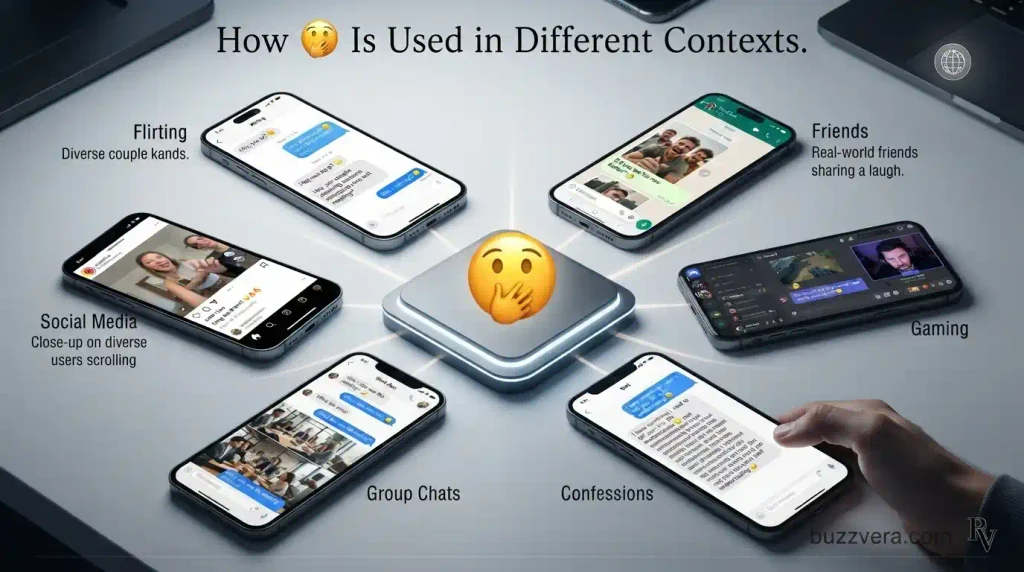
The emoji shifts slightly depending on where and who it’s coming from.
In flirty texting
The most common use. It softens a bold or honest statement.
Him: not gonna lie, i think about you more than i probably should 🫣
You: that’s really sweet actually
Between friends
Not always romantic can just express shy honesty or gossip reactions.
Friend: i may have texted my ex last night 🫣
You: WHAT tell me everything
On social media
Used in comments reacting to something bold, funny, or slightly scandalous.
Comment: the way she called him out in the comments 🫣
Reply: she did NOT hold back
In gaming and casual chats
Less common, but used to react to an awkward or funny in-game moment.
Chat: i just accidentally team-killed you 🫣
You: i saw that 😭
In group chats
Often used reacting to gossip, screenshots, or drama.
Friend: ok don’t say anything but guess who texted me 🫣
You: SPILL
From guys specifically
This is where 🫣 shows up most distinctly. Guys often use it to soften something emotionally honest, since fully spelling out feelings can feel vulnerable.
Him: i kind of miss talking to you every day 🫣
Key point: Across contexts, 🫣 almost always signals a mix of honesty and shyness never anger or coldness.
Common Misconceptions About 🫣
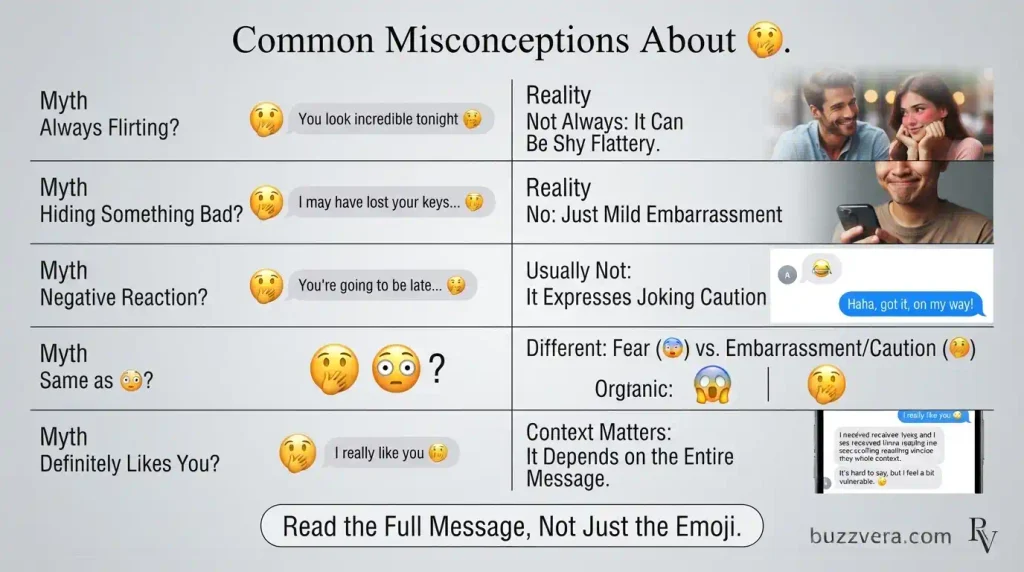
Let’s clear up a few things people often get wrong.
Myth 1: 🫣 always means he’s flirting
Not always true. It can also be used between friends, siblings, or in group chats without any romantic meaning at all.
Myth 2: 🫣 means he’s hiding something bad
No. The peeking through fingers feeling usually points to shyness or playful embarrassment not deception or dishonesty.
Myth 3: 🫣 is a negative reaction
Not true. It’s one of the softer, more affectionate emojis. It rarely signals discomfort about the other person usually just shyness about what was said.
Myth 4: 🫣 means the same thing as 😳
Close, but not identical. 😳 often shows shock or surprise. 🫣 leans more into I said something bold and I’m bracing for your reaction.
Myth 5: If he sends 🫣, he definitely likes me
It’s a good sign, but not proof on its own. Context matters was it after a compliment? A confession? Just a joke? The message around it tells the real story.
When it could be misread
If a message feels intense or oddly forward, 🫣 might be softening something that still needs a clear conversation, not just a cute reaction.
Him: i lowkey stalked your whole instagram last night 🫣
You: haha okay that’s a lot but noted 😅
Key point: 🫣 sets a tone, not a guarantee. Always read the full message, not just the emoji.
Similar Emojis and Alternatives
🫣 has a few emoji cousins that carry similar but slightly different energy.
| Emoji | Meaning | Feel |
| 🫣 | Peeking through fingers | Shy, bold confession |
| 🙈 | See-no-evil monkey | Embarrassed, hiding |
| 😳 | Flushed face | Shocked, caught off guard |
| 😏 | Smirking face | Confident, flirty |
| 🥺 | Pleading face | Soft, vulnerable |
| 😅 | Nervous smile | Awkward relief |
| 🤭 | Hand over mouth | Giggly secret |
Notes on the close ones
🙈 feels a bit more classic and playful often paired with light embarrassment, not necessarily flirting.
Friend: i cried during a commercial today 🙈
🤭 feels more like holding in a giggle or a secret, slightly different from the bracing for reaction feeling of 🫣.
Him: i might have saved your photo as my wallpaper 🤭
😏 is more confident and less shy the opposite energy of 🫣, even though both can appear in flirty texts.
Key point: If 🫣 feels too shy for the moment, 😏 signals confidence instead. If it feels too intense, 🙈 softens it further.
How to Respond to 🫣
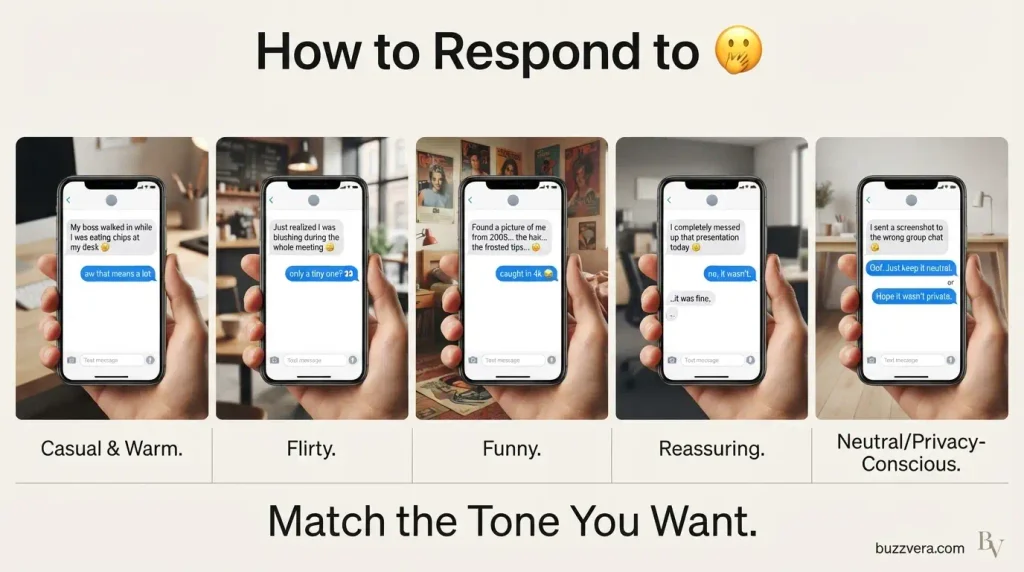
Your reply depends on the vibe you want to set.
1. Casual and warm
Simple, friendly, keeps things light.
Him: you’re actually really easy to talk to 🫣
You: aw that means a lot, you too
2. Flirty back
Match the energy if you’re into it.
Him: i might have a tiny crush on you 🫣
You: only a tiny one? 👀
3. Funny reply
Great for keeping things playful.
Him: i definitely liked your photo from 3 weeks ago just now 🫣
You: caught in 4k 😂
4. Reassuring reply
If he seems nervous about what he said.
Him: that was probably too much to say 🫣
You: no, it wasn’t. i’m glad you told me
5. Privacy-conscious or neutral reply
If you’re not sure how you feel yet, keep it light without over-committing.
Him: i’ve kind of liked you for a while 🫣
You: that’s really sweet, let’s keep talking and see where it goes
Key point: There’s no wrong way to respond just match the emotional tone he set, or gently redirect if you need more time.
Regional and Cultural Differences
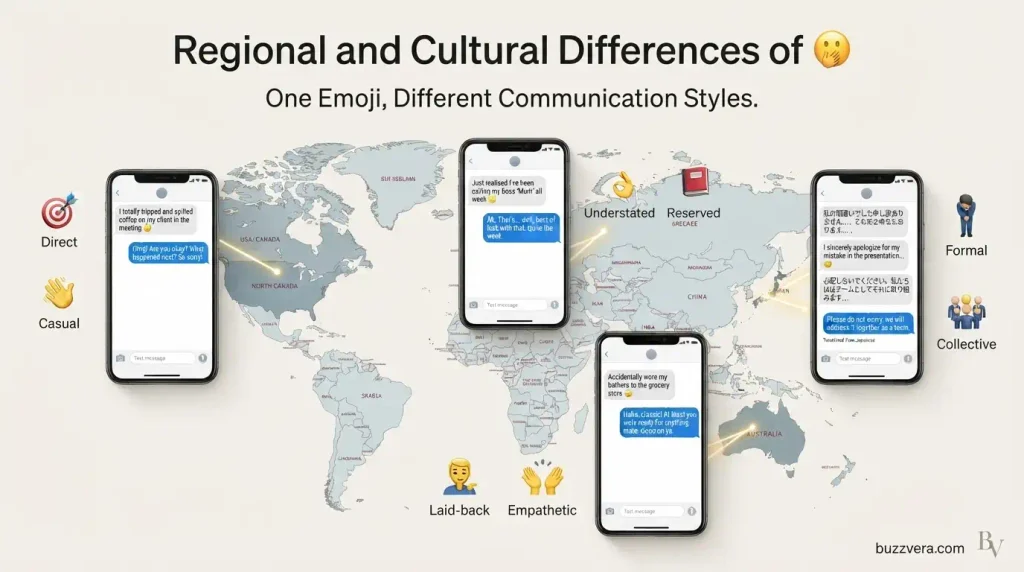
Emoji meanings can shift a little depending on where you are and who you’re texting.
United States and Canada
Very common in flirty and casual texting, especially among younger users on dating apps and social media.
United Kingdom and Ireland
Similarly popular, often paired with dry humor or understated confessions.
Text: ngl you’re kind of growing on me 🫣
Australia and New Zealand
Common in casual texting, often used to soften banter between friends or new couples.
Non-English-speaking regions
In many countries, 🫣 is understood visually even without English text, since emoji meanings tend to translate well across languages. However, it’s most heavily used among younger, social-media-active users.
French text: je pense trop à toi 🫣
Cultural note on directness
In cultures where direct emotional expression is less common in early conversations, 🫣 can serve as a useful bridge letting someone hint at feelings without stating them outright.
| Region | 🫣 usage |
| USA / Canada | Very high |
| UK / Ireland | High |
| Australia / NZ | High |
| Non-English-speaking regions | Medium, mostly younger users |
Key point: The emoji itself doesn’t need translation its shy confession feeling reads clearly across most cultures.
🫣 Compared With Similar Emojis
| Emoji | Meaning | Tone | Best for |
| 🫣 | Peeking through fingers | Shy, bold honesty | Soft confessions |
| 🙈 | See-no-evil | Embarrassed | Light awkwardness |
| 😳 | Flushed face | Shocked | Surprise reactions |
| 😏 | Smirking | Confident | Bold flirting |
| 🤭 | Hand over mouth | Giggly | Secrets, gossip |
The quick read
- Did he say something honest or bold? → 🫣 fits
- Is he reacting to something surprising? → 😳 fits better
- Is he being confidently flirty? → 😏 is closer
- Is it a lighthearted secret? → 🤭 fits well
🫣 in Online Communities and Dating Apps
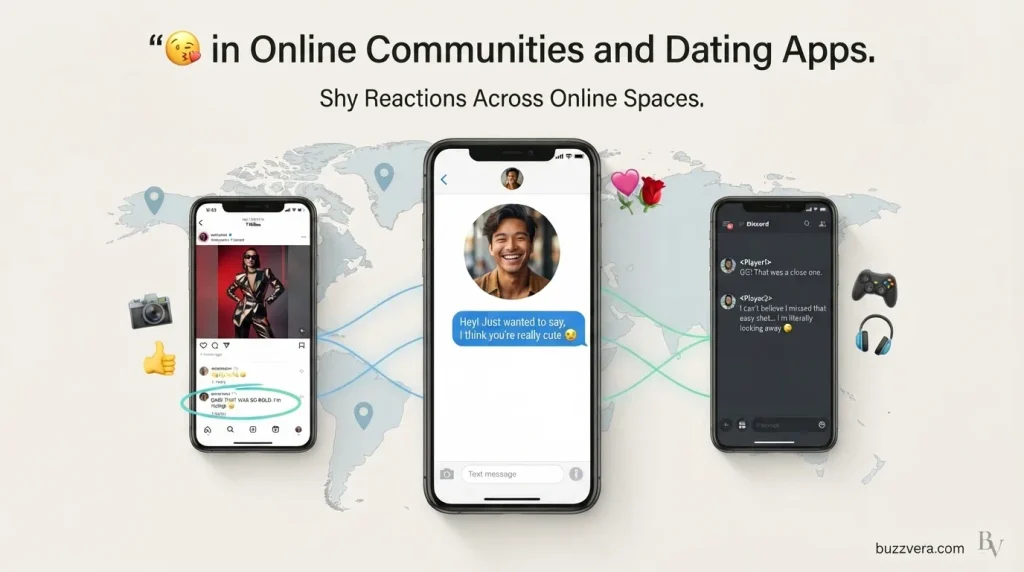
On dating apps
🫣 shows up often once conversations start feeling more personal.
Match: ok i’ll admit it, i think you’re really cute 🫣
You: well now I’m smiling at my phone like an idiot
It softens vulnerability, making early honesty feel less intense.
On Twitter/X and TikTok
Used widely in comments reacting to bold statements, confessions, or funny callouts.
Comment: the way he texted back in 2 seconds after playing it cool all week 🫣
Reply: we see you 👀
In gaming communities
Less common, but occasionally used to react to an embarrassing in-game mistake or funny moment.
Chat: i just walked straight into a trap in front of everyone 🫣
Chat: iconic honestly
Tips for responding appropriately
- On dating apps, match his vulnerability with warmth, not sarcasm, if you’re interested.
- In casual social spaces, it’s usually safe to respond playfully.
- If unsure of the tone, a simple warm reply works in almost every case.
Him: i’ve been kind of nervous to text you today 🫣
You: don’t be, i’m glad you did
Key point: 🫣 usually invites warmth, not pressure. A kind, easygoing reply almost always lands well.
Hidden or Offensive Meanings
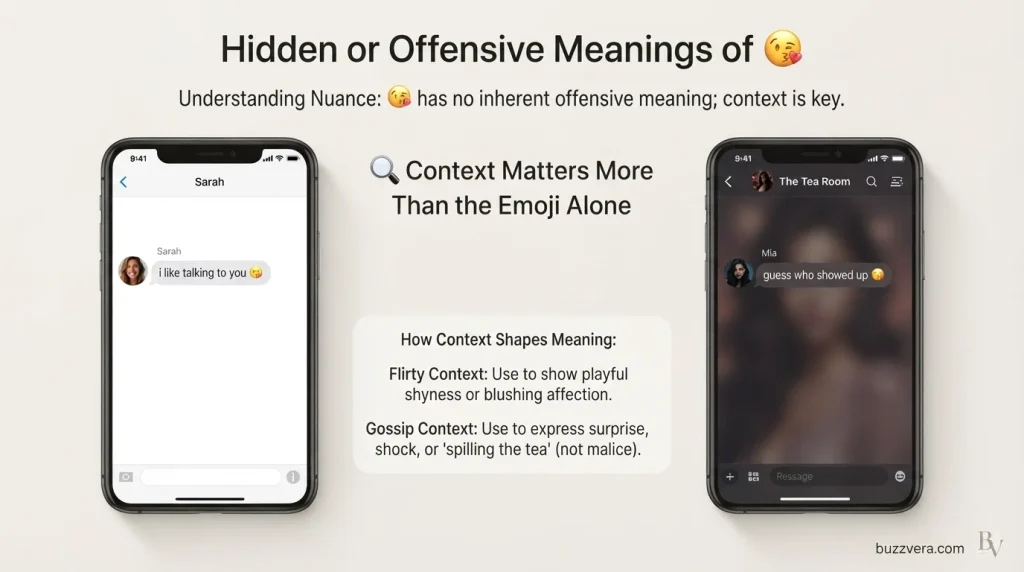
Good news 🫣 is a low-risk, gentle emoji.
The straightforward truth
🫣 has no common offensive meaning. It’s designed to express shyness and soft vulnerability, not anything negative or inappropriate.
The one nuance to know
While rare, 🫣 can occasionally be used sarcastically, especially reacting to drama or gossip that isn’t necessarily flirty.
Friend: guess who showed up to the party uninvited 🫣
You: oh no 😭
Here, it’s expressing this is a lot, not shyness about feelings.
When context matters most
If 🫣 follows a message that feels too personal or oddly forward, it’s worth noticing the full message rather than just the emoji.
Him: i found your old photos and 🫣
You: haha okay, let’s not go down that road 😅
That’s a completely reasonable, light way to set a boundary if a message feels like too much.
Why tone still matters
Compare:
A: you’re honestly really sweet and i like talking to you 🫣
versus
B: i saw what you posted 🫣
A feels warm and flirty. B feels more like I noticed something, which depends heavily on context.
Key point: 🫣 itself carries almost no risk but always read the full sentence around it, not just the emoji.
Is 🫣 Suitable for Professional Communication?
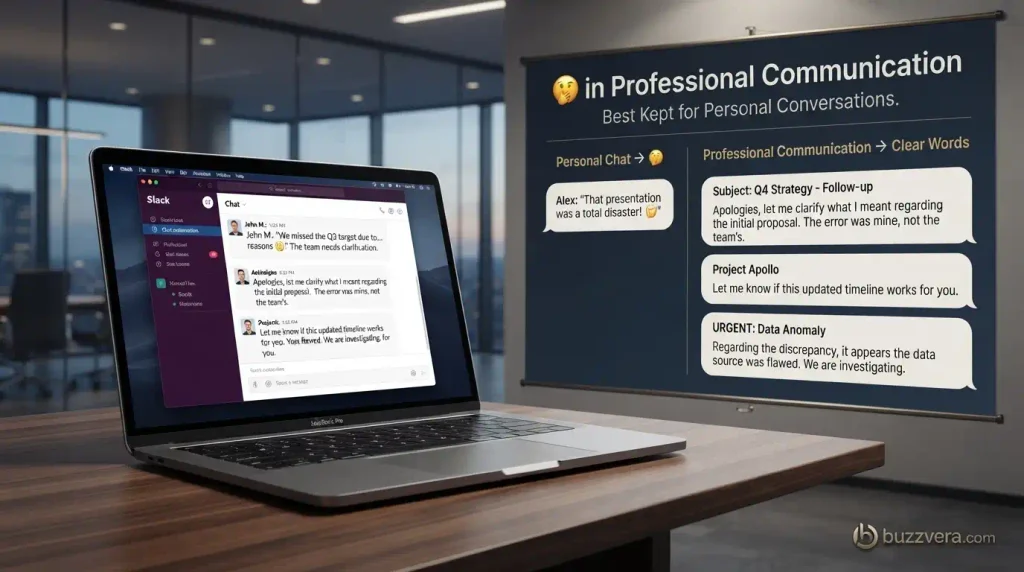
Short answer: no, this one stays out of work chats.
Why it doesn’t fit
- It’s emotionally expressive, which doesn’t suit formal tone
- It can be misread as flirty, even unintentionally
- It has no professional equivalent meaning
- Work communication generally avoids emojis tied to shyness or vulnerability
What to use instead
| Instead of | Write this |
| sorry, that came out wrong 🫣 | Apologies, let me clarify what I meant. |
| 🫣 hope that’s okay | Let me know if this works for you. |
| 🫣 that’s a bit awkward to bring up | I wanted to raise a small concern, if that’s alright. |
Where 🫣 is fine
- Texting friends or a partner
- Flirty or casual dating app conversations
- Social media comments and captions
- Casual group chats
Key point: Save 🫣 for personal conversations. In professional spaces, spell out the feeling in plain, clear language instead.
Frequently Asked Questions
1. What does 🫣 mean from a guy?
It usually means he said something honest, bold, or slightly vulnerable and feels a little shy about it.
2. Does 🫣 always mean he likes you?
Not always but paired with a compliment or personal admission, it’s often a strong sign of interest.
3. Is 🫣 the same as 🙈?
They’re similar, but 🙈 leans more toward general embarrassment, while 🫣 leans more toward bold honesty.
4. How should I respond to 🫣?
Match his tone warm if you’re interested, light and friendly if you want to keep things casual.
5. Can 🫣 be used between friends, not just romantically?
Yes, it’s common in gossip or lighthearted confessions between friends too.
6. Is 🫣 appropriate for work messages?
No, it’s best kept for personal or casual conversations, not professional ones.
7. Does 🫣 ever mean something negative?
Rarely. It’s one of the more gentle, affectionate emojis, though it can occasionally express mild that’s a lot reactions.
Conclusion
🫣 means someone is peeking through their fingers a perfect visual for feeling shy, bold, or a little vulnerable all at once. From a guy, it often softens an honest or flirty message, letting him express real feelings without sounding too intense.
Across texting, social media, and dating apps, 🫣 signals warmth more than anything else. It rarely carries negative meaning, though the full message around it always matters more than the emoji alone.
If a guy sends you 🫣, take it as a small window into how he’s feeling shy, honest, and a little nervous about your reaction. A warm, easygoing reply almost always keeps the moment feeling exactly as sweet as he meant it.

Mafia Noor is an experienced content writer and author at BuzzVera.com, with 3 years of experience creating helpful and easy-to-understand content. Mafia specializes in texting slang, internet abbreviations, modern expressions, and text meanings, helping readers understand today’s digital language clearly and confidently.